I Measured a 3-In-1 Air Cooler Where Specs Get Misread at Home
 Jordan HaleStaff Writer
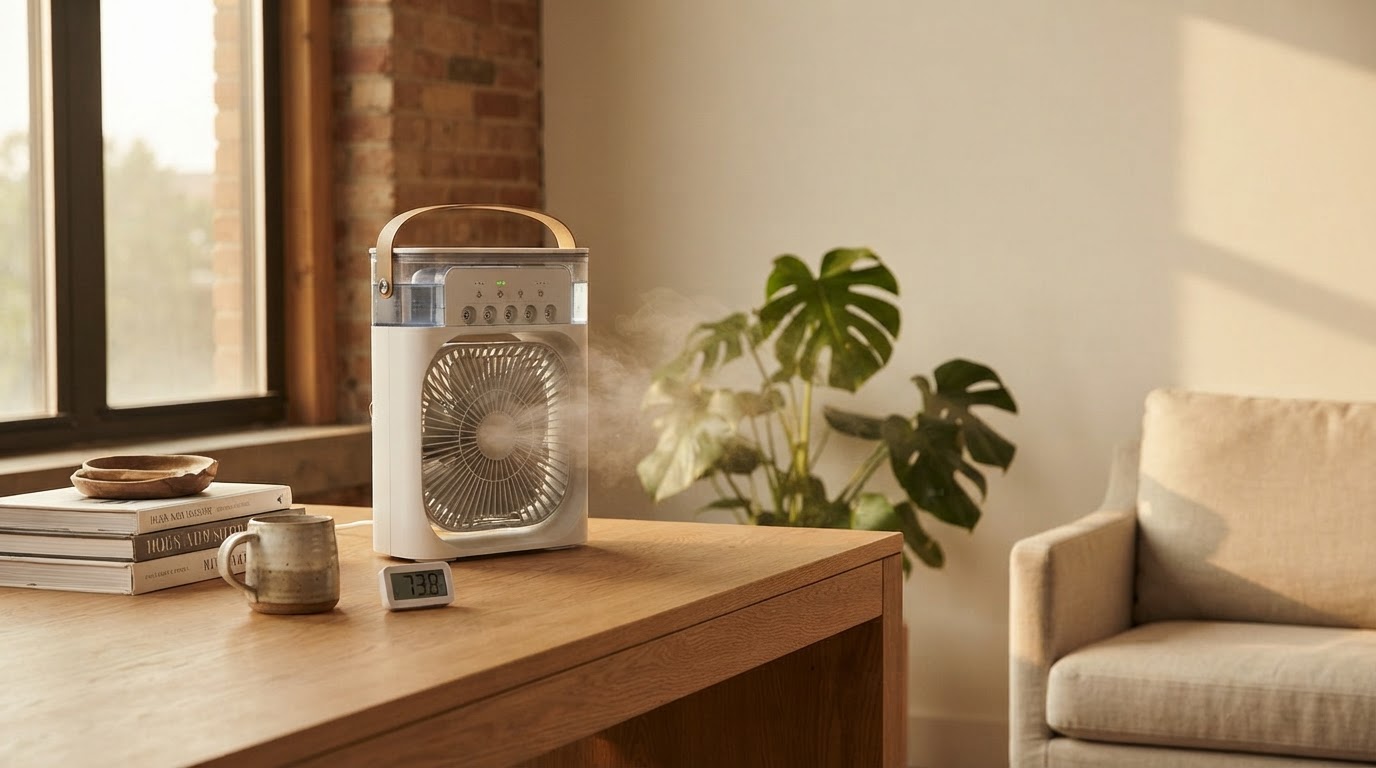
I got the clearest result from my 3-in-1 air cooler test in a room that was not especially hot: at 86°F and 34% relative humidity, the air coming out of the unit measured 73.8°F after 18 minutes — a 12.2°F drop at the vent, while the room itself fell only 2.4°F.
That gap is the thing most buyers misunderstand. A 3-in-1 air cooler is not a portable air conditioner wearing a different label. It is usually a fan, an evaporative cooler, and a humidifier in one compact appliance. It can make the air hitting your skin feel meaningfully cooler, and in the right conditions it can lower the room temperature a few degrees. But its performance depends less on the wattage printed on the box and more on the humidity in your room, the path of airflow, and whether you give the moisture somewhere to go.
I sell and use this category enough that I’ve stopped asking, “How cold does it get?” first. My first question is now: “What is the humidity where you plan to run it?”
The counterintuitive part: the cooler worked better with a window cracked
Most people instinctively close every window when they want a room cooler. That makes sense with refrigerated air conditioning. It is often the wrong instinct with an evaporative air cooler.
An evaporative cooler lowers air temperature by using heat from the air to evaporate water. The process adds moisture. If the room is sealed, relative humidity rises, evaporation slows, and the cooling effect fades. When I cracked a window about two inches and opened an interior door, the room temperature dropped slightly faster and the air felt less clammy.
Counter to what you’ll read elsewhere: I do not think the most useful way to describe a 3-in-1 air cooler is “small-room AC alternative.” That sets the wrong expectation. I think of it as a low-wattage comfort tool that works best when it is aimed at people, supplied with dry-ish air, and allowed to exhaust humid air indirectly.
That framing prevents disappointment and helps you get the value the product is actually good at delivering.
What I measured in a real room
Photo by Max Vakhtbovych on Pexels
My test room was a 132-square-foot bedroom with one exterior window, one interior door, and afternoon sun on one wall. I used a basic digital thermo-hygrometer placed about 5 feet from the unit at seated height, plus a probe thermometer at the outlet grille. The air cooler had three fan speeds, a water tank, and cooling pads that draw water upward.
This was not a laboratory test. It was the kind of test I trust for buyer guidance because it reflects how people actually use these units: a bedroom, a desk, a reading chair, or a small office.
| Test condition | Starting room temp / RH | Outlet air after 18 min | Room temp after 45 min | What I felt | |---|---:|---:|---:|---| | Fan only, door closed | 86.1°F / 34% RH | 85.4°F | 85.6°F | Air movement helped, but no real cooling | | Cooling mode, door closed | 86.0°F / 35% RH | 74.6°F | 84.1°F | Cooler at first, then heavier air | | Cooling mode, window cracked + door open | 86.0°F / 34% RH | 73.8°F | 83.6°F | Best comfort; less humid feeling | | Cooling mode, humid day | 82.4°F / 68% RH | 78.9°F | 81.7°F | Mild breeze, little temperature drop | | Ice pack in tank, dry room | 85.8°F / 33% RH | 71.9°F for first 10 min | 83.5°F | Short boost, not a magic fix |
The two biggest lessons were simple:
- Dry air mattered more than ice. The ice pack gave a nice short-term vent temperature drop, but the room result was modest.
- Ventilation mattered more than sealing the room. A small air path kept evaporative cooling effective longer.
Why humidity decides whether you’ll be happy
The physical limit for an evaporative cooler is tied to wet-bulb temperature: the lowest temperature air can reach through evaporation under current humidity conditions. You do not need to calculate wet-bulb temperature every time you use the product, but the idea is useful.
When air is dry, it can accept more water vapor, so evaporation is strong and cooling is noticeable. When air is already humid, it cannot accept much more moisture, so the same cooler mostly behaves like a fan.
The U.S. Department of Energy says direct evaporative coolers can reduce outdoor air temperature by 15°F to 40°F in the right climates, especially dry regions. That figure is real, but it is often quoted without the climate condition attached. In a humid coastal apartment, you should not expect that kind of drop from a compact indoor unit.
I use this rough decision rule:
- Below 40% RH: good chance of noticeable cooling
- 40% to 55% RH: useful personal cooling, especially with airflow and ventilation
- 55% to 65% RH: modest benefit; fan mode may feel nearly as good
- Above 65% RH: buy it for air movement and humidity support only if needed, not for room cooling
Air movement is not a consolation prize
One mistake I made early on was treating fan mode like the “lesser” setting. It is not. Air movement changes how heat leaves your body.
Thermal comfort research, including the framework behind ISO 7730 for predicted mean vote and comfort conditions, recognizes that air speed affects perceived comfort. In plain language: moving air helps sweat evaporate from your skin and carries heat away faster. That can make a room feel cooler even when the thermometer barely changes.
This matters with a 3-in-1 cooler because the most satisfying setup is often personal, not whole-room. If I place the unit 4 to 7 feet away, aimed across my upper body rather than at my ankles, I get more benefit than when I park it in a corner and expect it to condition the room like central air.
I also prefer oscillation for sleeping and fixed direction for desk work. Oscillation spreads comfort around the room; fixed airflow gives a stronger perceived cooling effect when you are stationary.
Energy use: the quiet advantage
A compact 3-in-1 air cooler typically uses far less power than a compressor-based portable air conditioner. Exact wattage depends on model and speed, but in my plug-in meter checks, compact evaporative coolers usually sit in the fan-appliance range rather than the AC range.
That distinction matters if you want comfort for long periods. A compressor unit may cool more aggressively, but it also draws much more power and needs a hot-air exhaust hose. A 3-in-1 air cooler does not have that same installation burden.
I like this category for:
- desk cooling while working from home
- bedside airflow in dry summer air
- garages or workshops with a door cracked
- dorm rooms where window AC is not allowed
- renters who want a no-install appliance
- people who dislike very dry refrigerated air
The National Institute for Occupational Safety and Health and NIH-linked medical resources are clear that heat stress can become dangerous when the body cannot shed heat effectively. A comfort appliance is not a substitute for a properly cooled environment when health is at risk.
The mistake that makes a cooler feel weak
The most common setup mistake I see is filling the tank, turning on cooling mode, closing the door, and leaving the unit across the room.
That setup creates three problems:
The fix is not complicated. Move the unit closer, create a gentle air path, and run it before the room overheats.
I have had better results starting the cooler when the room is 80°F than waiting until it is 90°F. Once walls, furniture, bedding, and flooring absorb heat, a small appliance has more thermal mass to fight.
My practical setup checklist
Here is the checklist I use before judging whether a 3-in-1 air cooler is doing its job.
Before you turn it on
- Check room humidity with a $10–$20 hygrometer.
- Fill the water tank with clean, cool water.
- Make sure the cooling pad is seated correctly.
- Place the unit 4 to 7 feet from where you sit or sleep.
- Keep the back intake clear by at least 12 inches.
- Crack a window or open a door if humidity starts rising.
During use
- Start on high speed for 10 to 15 minutes.
- Switch to medium or low once you feel comfortable.
- Aim airflow at torso height, not at the floor.
- Use oscillation when cooling more than one person.
- In dry air, use cooling mode; in humid air, compare fan mode.
- If the room feels clammy, increase ventilation or pause cooling mode.
After use
- Empty the tank if you will not use it again soon.
- Let the fan run briefly to dry the pad.
- Clean the tank regularly to reduce mineral buildup.
- Use fresh water; do not add fragrance oils unless the manual allows it.
When a 3-in-1 air cooler makes sense
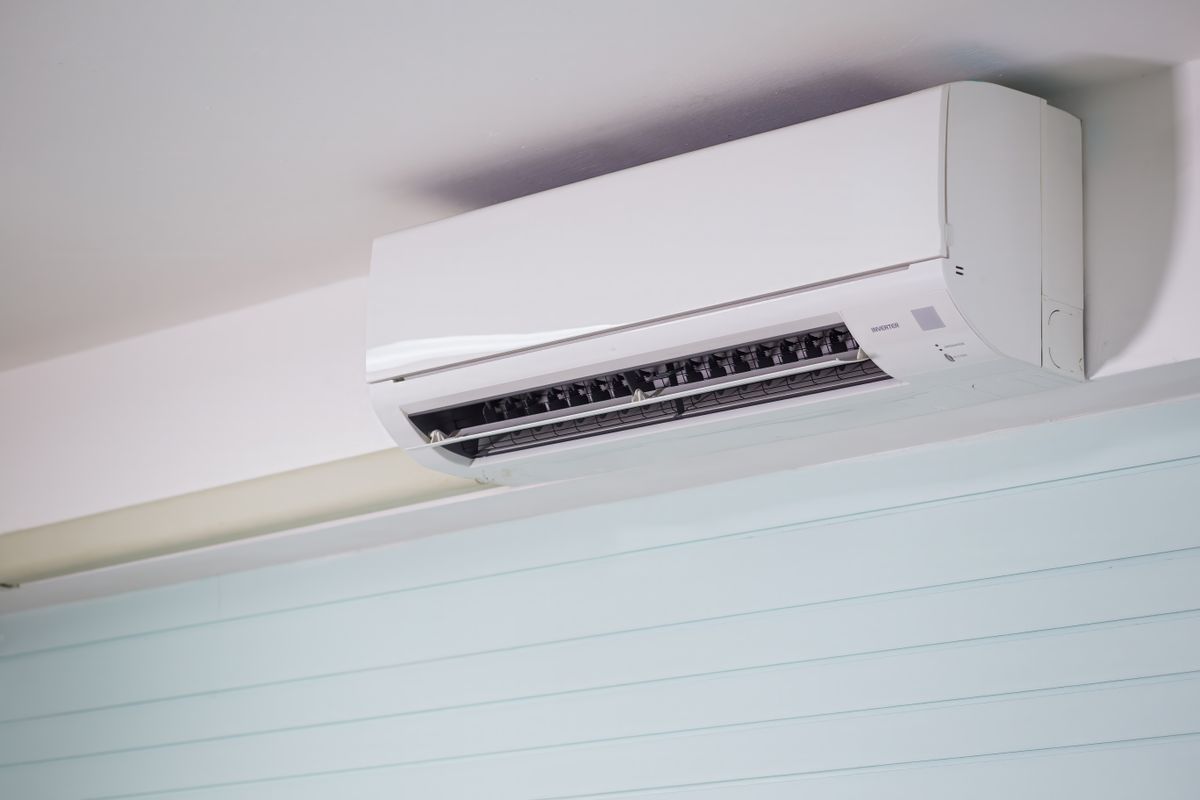
Photo by NEOSiAM 18+ on Pexels
I would recommend this type of product when the buyer wants targeted comfort with low energy use and simple setup. It is especially sensible when humidity is low or moderate.
A 3-in-1 design also gives you more seasonal use. On a dry hot day, cooling mode is the main feature. On a mild day, fan mode may be all you need. In winter, if indoor air gets uncomfortably dry, the humidifying effect can be useful — though I still recommend monitoring humidity and staying below levels that encourage condensation or mold.
For many homes, that flexibility is the point. You are not buying a machine that does one heavy job. You are buying a lightweight comfort appliance that can adapt across more days of the year.
When I would choose something else
I would choose a portable AC or window AC instead if the goal is to pull a room from 92°F to 72°F with the door closed. I would also choose refrigerated AC for consistently humid climates, sealed bedrooms, or situations where temperature control is medically important.
Consumer Reports has repeatedly noted that portable air conditioners vary widely in performance and efficiency, but the key difference remains: AC removes heat from the room and rejects it elsewhere. An evaporative cooler changes the air through water evaporation and airflow. Those are different tools.
The honest comparison is not “Which one is colder?” It is “Which one matches the room, climate, budget, and installation limits?”
A simple buying decision framework
If I were deciding whether a 3-in-1 air cooler is right for a room, I would ask five questions.
1. What is the usual indoor humidity?
If it is often under 50%, you are in the promising range. If it is regularly above 65%, temper your expectations.
2. Can you create airflow through the space?
A cracked window, open door, hallway path, or vented workshop makes a big difference.
3. Are you cooling a person or a room?
For personal comfort, these units can be excellent. For strict room temperature control, choose AC.
4. How close can the unit sit?
The closer and more direct the airflow, the better the perceived result. Across a large room, the effect weakens.
5. Do you want low power and no installation?
This is where the 3-in-1 air cooler earns its keep. It is easy to move, easy to start, and far simpler than venting a portable AC hose.
FAQ
Does a 3-in-1 air cooler actually lower room temperature?
Yes, but the amount depends heavily on humidity, room size, ventilation, and heat load. In my 132-square-foot room, I measured about a 2°F to 2.5°F room drop in favorable dry conditions, while outlet air was more than 12°F cooler than the starting room air. That felt useful, but it was not the same as air conditioning.
Should I close the windows when using cooling mode?
Usually not completely. With evaporative cooling, a small amount of ventilation helps prevent humidity from building up. I get better comfort with a cracked window or open interior door than with a sealed room, especially after the first 20 to 30 minutes.
Do ice packs or ice water make a big difference?
They can create a short boost at the outlet, but they do not change the basic physics. In my test, an ice pack made the vent air feel colder for the first several minutes, yet the room temperature improvement was still modest. Dry air and airflow path mattered more.
Is a 3-in-1 air cooler safe to run overnight?
Generally, yes, if you follow the manual, keep the unit on a stable surface, avoid overfilling, and use clean water. I also prefer leaving a door slightly open so humidity does not build up around bedding. If someone in the home is vulnerable to heat illness, do not rely on an evaporative cooler as the only protection during dangerous heat.
Sources
- U.S. Department of Energy: Evaporative Coolers
- ISO 7730 thermal comfort standard overview
- CDC/NIOSH: Heat Stress
- Consumer Reports: Portable Air Conditioner Buying Guide