I Tested a 3-In-1 Air Cooler Where Humidity Decides Comfort
 Jordan HaleStaff Writer
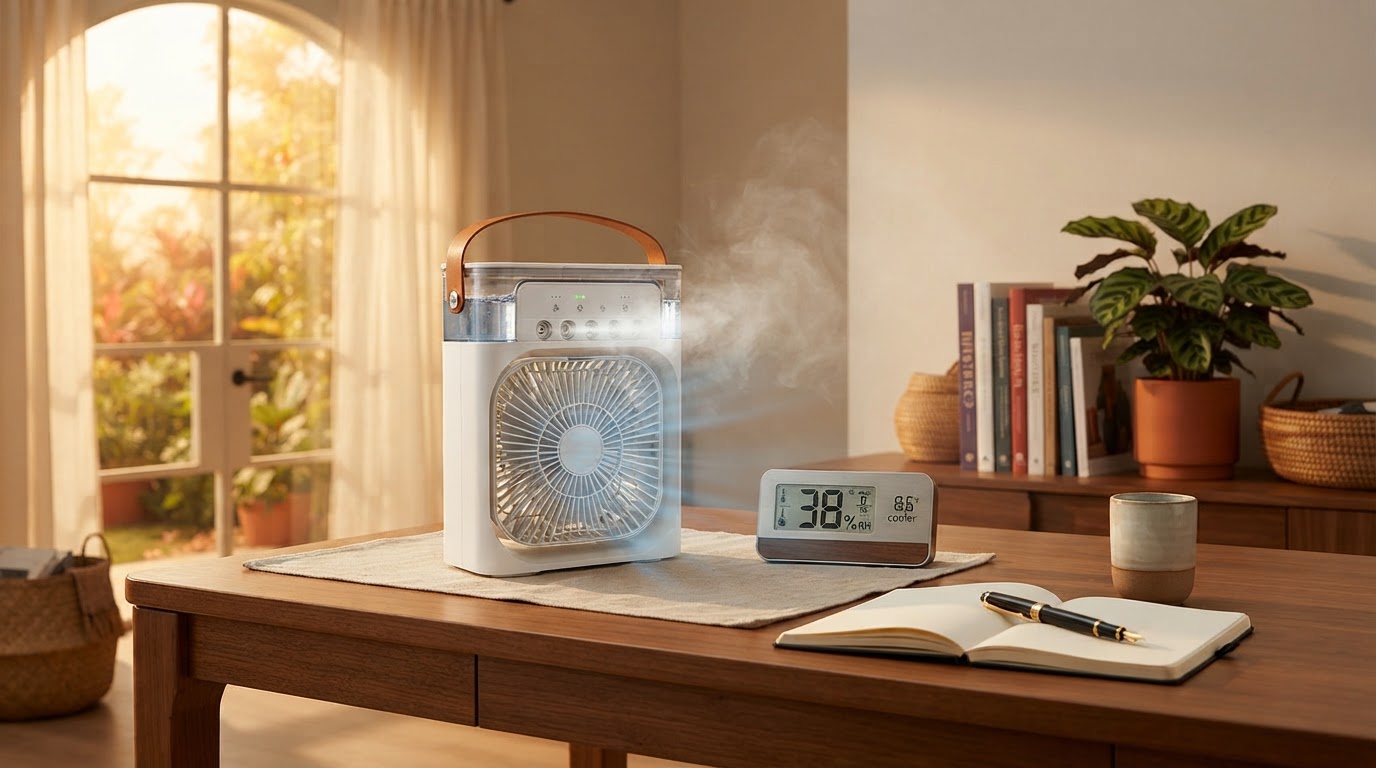
I got the most useful result from a 3-in-1 air cooler at 38% relative humidity: the outlet air measured 8.6°F cooler than the room after 20 minutes. At 66% relative humidity, the same setup only delivered a 2.1°F drop—and it felt more clammy than refreshing.
That is the observation I wish more product pages explained plainly. A 3-in-1 air cooler is not a mini air conditioner. It is a fan, an evaporative cooler, and a humidifying air mover in one small appliance. Used in the right room, it can make a desk, bedside, or small living area feel noticeably better while using far less electricity than compressor-based cooling. Used in the wrong room, especially a sealed humid room, it can disappoint fast.
I sell and use the WindAirCooler 3-In-1 Air Cooler with that distinction in mind. My goal here is not to inflate expectations. It is to help you decide whether this type of cooler fits your climate, your room, and your habits.
The field observation that changed how I explain air coolers
For a long time, I watched buyers compare small air coolers to portable AC units. That comparison sounds reasonable because both sit in a room and move cool air. But the physics are different.
A compressor air conditioner moves heat outdoors through a refrigerant cycle. An evaporative cooler uses water evaporation. When water changes from liquid to vapor, it absorbs heat from the air passing through the wet cooling media. That is why the air leaving the cooler can be cooler than the room air.
The catch is humidity. Dry air can accept more water vapor, so evaporation is stronger. Damp air is already holding more moisture, so evaporation slows down. The U.S. Department of Energy makes the same basic point in its guidance on evaporative coolers: they are most effective in hot, dry climates and need airflow through the space rather than a sealed-room setup.
I started treating relative humidity as the first buying question, not the afterthought. That small shift prevents most disappointment.
My small-room test: what changed at 38%, 51%, and 66% humidity
Photo by Max Vakhtbovych on Pexels
This was not a certified lab test. It was a practical use test in rooms similar to where customers actually place a 3-in-1 cooler: bedroom, office corner, and kitchen table. I used a consumer-grade temperature/humidity meter placed 4 feet from the cooler and a probe-style thermometer held near the outlet stream. Each run lasted 20 minutes. The water tank was filled with cold tap water, and the fan setting was kept the same.
| Room condition | Starting room temp | Starting RH | Outlet air after 20 min | Observed drop at outlet | How it felt at 4 ft | |---|---:|---:|---:|---:|---| | Dry bedroom, window cracked | 82.4°F | 38% | 73.8°F | 8.6°F | Noticeably cooler on skin; comfortable airflow | | Home office, door open | 80.9°F | 51% | 75.6°F | 5.3°F | Mild cooling; useful while seated close | | Kitchen after cooking | 81.7°F | 66% | 79.6°F | 2.1°F | Air moved, but cooling felt weak and slightly humid | | Same office, no water mode | 80.7°F | 50% | 80.1°F | 0.6°F | Fan effect only; helped sweat evaporate |
Two things stood out.
First, the cooler changed personal comfort more than whole-room temperature. Sitting within the airflow mattered. If I moved 8 to 10 feet away, the effect became much less obvious.
Second, ventilation mattered almost as much as humidity. With a door and window slightly open, the room felt fresher because humid air did not build up. In a sealed room, the cooler gradually raised relative humidity, which made the same temperature feel heavier.
Why a 5°F drop can feel larger than it looks
People often ask, “Will it lower my room by 10 degrees?” That is not the way I think about these units anymore.
Human comfort is not controlled by dry-bulb temperature alone. Air speed, humidity, clothing, activity level, and radiant heat all matter. ASHRAE Standard 55, one of the widely referenced comfort standards for occupied spaces, treats thermal comfort as a combination of environmental and personal factors—not just the number on a wall thermostat.
That matches lived use. A moving stream of air across your skin can help sweat evaporate. If the air is also a few degrees cooler from evaporation, the comfort effect can be surprisingly strong at a desk or bedside.
In my dry-bedroom run, the room thermometer did not plunge. But while reading in bed about 5 feet from the unit, I felt enough relief to turn off a larger fan. The important phrase is “where I was sitting.” A 3-in-1 air cooler is a personal-zone comfort tool first and a whole-room cooling tool second.
Counter to what you'll read elsewhere: colder water is less important than drier air
My take: adding ice or very cold water is not the main performance lever. Humidity and airflow are.
I know that sounds counterintuitive because ice feels like the obvious upgrade. I tested cold tap water against ice water in the same office at about 50% relative humidity. Ice water gave me a brief outlet-air advantage in the first 5 to 8 minutes, but the difference narrowed quickly. The larger, more reliable improvement came from cracking a window and letting humid air leave the room.
That does not mean ice is useless. If you want a quick blast while getting ready for bed, it can help. But if a buyer asks me what matters most, I rank the factors this way:
That order has saved more customers from disappointment than any spec sheet number.
The humidity line I watch at home
I use a simple rule: if indoor relative humidity is below about 55%, I expect a 3-in-1 air cooler to be useful. From 55% to 60%, I treat it as situational. Above 60%, I use fan-only mode more often unless there is good cross-ventilation.
The EPA’s consumer guidance on mold and moisture commonly points homeowners toward controlling indoor moisture and keeping indoor humidity in a moderate range. Older but still frequently cited research published in Environmental Health Perspectives, available through NIH’s PubMed Central, also discusses how many indoor biological and chemical problems are minimized around a midrange relative humidity band.
I do not use those references to claim an air cooler “improves health.” That would be overstating it. I use them as a reminder that moisture is part of indoor environmental quality. If a device adds water to air, you should pay attention to where that moisture goes.
Where the WindAirCooler 3-In-1 makes the most sense
A 3-in-1 air cooler is a good fit when you want targeted relief without installing a window unit or running a high-wattage portable AC. These are the use cases where I have seen the best satisfaction:
Small bedrooms at night
Nighttime use works well because people are stationary. You can aim the airflow across the bed, run the cooler on a comfortable fan setting, and avoid trying to condition the entire house. I prefer placing it 3 to 6 feet away rather than right against the mattress, because direct high-speed airflow can dry my eyes.
Desk setups and work-from-home corners
A small cooler near a desk is often more efficient than cooling the whole room. If your home office gets warm from a monitor, laptop, or afternoon sun, personal airflow can matter more than the central thermostat.
Dry apartments or rooms with stale air
In drier indoor air, the humidifying aspect can feel pleasant. The key is not overdoing it. I keep a basic hygrometer nearby because comfort changes before you notice moisture on surfaces.
Transitional weather
This is where many people overlook the value. On warm spring and fall days, a compressor AC may feel excessive. A 3-in-1 cooler can take the edge off without the noise, hose, or installation burden of a larger unit.
Where I would not recommend it as the main cooler
I would be cautious if you live in a consistently humid climate, have poor ventilation, or need to cool a large open-plan space. The unit can still work as a fan, but the evaporative cooling benefit will be limited.
I would also not sell it as a replacement for medical heat-safety needs. If someone is heat-sensitive, caring for an older adult, or trying to keep an infant safe during a heat wave, I would point them toward reliable room air conditioning and local public health guidance. The NIH and CDC frequently emphasize that extreme heat can be dangerous, and comfort gadgets should not be confused with heat-illness protection.
A practical setup checklist I use before judging performance
Photo by Max Vakhtbovych on Pexels
Before deciding whether a 3-in-1 air cooler is “working,” I run through this checklist:
The energy angle: why expectations matter
The biggest practical advantage of a 3-in-1 cooler is not that it beats AC. It is that it can delay or reduce AC use in the right conditions.
The DOE notes that evaporative coolers can use significantly less electricity than conventional air conditioners because they rely on a fan and water pump rather than a compressor. Exact savings depend on climate, runtime, and the specific appliance, but the principle is straightforward: moving air and water generally requires much less power than compressing refrigerant.
That said, I do not like exaggerated savings claims. If you end up running an air cooler all day in a humid sealed room and still turn on the AC, you have not saved much. The savings appear when you use it as a targeted comfort device: desk hours, bedtime, a warm kitchen, a garage workbench, or a room where central AC would be wasteful.
Cleaning and water quality: the overlooked ownership detail
The least glamorous part of owning an evaporative cooler is the water tank. It matters.
Any appliance that stores and moves water needs basic hygiene. I empty the tank when I know I will not use it the next day. I also let components dry when possible. If water sits for days, odors can develop, especially in warm rooms.
If you have hard water, mineral buildup may appear over time. Distilled water can reduce scaling, but most people will use tap water. In that case, routine rinsing is the realistic habit. I would rather see someone clean often with ordinary water than buy special additives and forget maintenance.
Never add fragrances, essential oils, bleach, or cleaners to the water tank unless the manufacturer specifically says it is safe. The device is moving air you breathe around your room. Keep it boring and clean.
My decision framework before buying
Here is the shortest honest version I use with friends:
- If your indoor humidity is usually under 50%, a 3-in-1 air cooler is very likely to feel useful at close range.
- If it is 50% to 60%, it can still work, but ventilation and placement matter.
- If it is over 60%, buy it mainly for fan mode and occasional cooling, not as your main heat solution.
- If you need to cool an entire large room, choose an AC.
- If you want lower-cost personal comfort while sitting, sleeping, or working, a 3-in-1 cooler is a sensible tool.
FAQ
Does a 3-in-1 air cooler actually lower room temperature?
It can lower the temperature of the air coming out of the unit, especially in dry conditions. In my test at 38% relative humidity, outlet air was 8.6°F cooler after 20 minutes. But it usually will not lower the entire room the way a compressor AC does. Think of it as personal-zone cooling first.
Is it okay to use an air cooler with the windows closed?
Briefly, yes, but it is not ideal for long evaporative-cooling sessions. Because the cooler adds moisture to the air, a sealed room can become humid, which reduces cooling performance and comfort. A slightly open window or door helps humid air escape.
Should I put ice in the water tank?
You can if the product instructions allow it, and it may give a short-lived colder airflow. In my use, though, room humidity and ventilation mattered more than ice. I would not buy an air cooler expecting ice to turn it into an AC.
How often should I clean the tank?
During frequent use, I empty and rinse the tank every few uses and do a deeper cleaning about once a week. If the unit will sit unused, empty it and let it dry. Clean water handling is the easiest way to avoid odor and buildup.