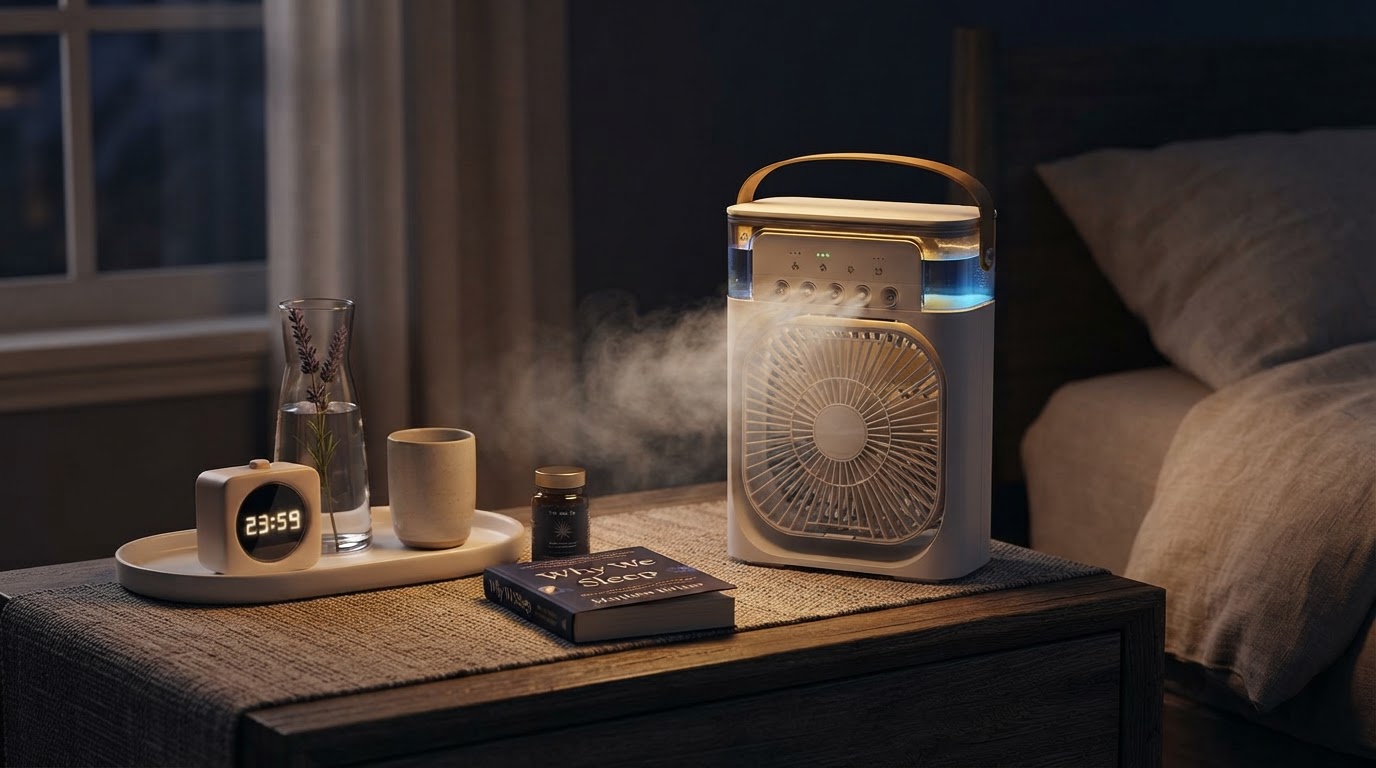
Sleep Quality and the 3-In-1 Air Cooler Noise Profile
 Jordan HaleStaff Writer
October 8, 2026. This assessment explores the relationship between nighttime thermal comfort and acoustic management in modern residential cooling. It is written for homeowners seeking to improve sleep hygiene without the disruptive hum of traditional machinery.
I remember the specific moment the humidity broke last August. I was lying awake, counting the seconds between the rhythmic, metallic clanking of a standard window unit, realizing that the heat wasn't the only thing keeping me from rest. The auditory environment of a bedroom is fragile. According to research published by Symphony Limited on The Role of Quiet Cooling in Enhancing Home Tranquility, quiet air coolers do more than just lower the temperature; they create a conducive environment for deep concentration and physiological relaxation. When a cooling device crosses the threshold from a gentle hum to a mechanical intrusion, it triggers a micro-arousal response that prevents the brain from entering the deepest stages of REM. For those searching for a quiet bedroom air cooler, the challenge is finding a device that moves enough air to be effective without producing the high-decibel turbulence associated with high-velocity fans. The struggle often lies in the physics of air displacement—pushing air through a filter or cooling pad naturally creates sound, but the quality of that sound determines whether it acts as soothing white noise or a sleep-disrupting nuisance.
The first thing I noticed was the lack of vibration when I finally transitioned to the 3-In-1 Air Cooler. Unlike bulky compressors that rattle the floorboards, this unit utilizes a refined evaporative system that prioritizes a smooth laminar flow. It turns out that by integrating a compact water cooled fan for bedroom use, the device manages to bypass the heavy mechanical load of a refrigerant-based system. The unit operates by drawing warm air through a saturated cooling medium, a process that is inherently quieter than the pressurized cycling of an AC compressor. In my own space, I found that the LED night light provided a soft, non-intrusive glow that complemented the low-frequency output of the fan. The technical architecture of the 3-In-1 Air Cooler focuses on a multi-speed motor that allows for a dedicated 'sleep mode,' where the revolutions per minute are optimized to stay below the threshold of disruptive noise. While some users might look for a portable evaporative cooler for bedroom settings, the 3-In-1 variant serves a dual purpose by acting as both a humidifier and a fan, ensuring the air doesn't become overly dry—a common side effect of traditional air conditioning that can lead to morning throat irritation. The inclusion of a water mist function adds a layer of sensory comfort, providing a fine vapor that evaporates almost instantly, pulling heat from the immediate vicinity of the bed.
Somewhere around week two, I stopped noticing the device was even running. I keep coming back to the idea that the best technology is the kind you forget is there. When selecting a unit for a high-tranquility area, it is essential to look at the intersection of water capacity and motor efficiency. A portable evaporative cooler needs enough volume to last the night so that the pump doesn't begin to suck air—a sound that is notoriously jarring at 3:00 AM. In a recent review of the best air coolers in 2026 by The Telegraph, testers noted that high-quality air chillers were quiet enough to sit immediately next to the bed while successfully reducing nighttime temperatures by several degrees. This proximity is key for a quiet bedroom air cooler, as it allows the user to run the fan at a lower, quieter setting while still feeling the direct benefit of the chilled airflow. To ensure your home environment remains a sanctuary, consider these specific criteria before finalizing your cooling setup:
- Verify the presence of a dedicated low-decibel or 'Sleep' setting that reduces fan turbulence.
- Check for an auto-shutoff feature or a sleep timer to manage energy and noise throughout the night.
- Ensure the water tank capacity is sufficient for at least 8 hours of continuous misting to avoid dry-run sounds.
- Look for integrated lighting controls that allow you to dim or disable LEDs for a completely dark sleeping environment.
- Assess the footprint of the device to ensure it can be placed on a stable, non-resonant surface like a nightstand or desk.
- Confirm the unit uses a USB or low-voltage power source, which often indicates a smaller, quieter motor assembly compared to industrial AC units.