3 in 1 Portable Air Cooler vs Traditional AC: Which Cooling Solution is Right for You?

3 in 1 Portable Air Cooler vs Traditional AC: Which Cooling Solution is Right for You?

May 11, 2026☕ 7 min read🏷 3 in 1 portable air cooler vs traditional AC

3 in 1 Portable Air Cooler vs Traditional AC: Which Cooling Solution is Right for You?

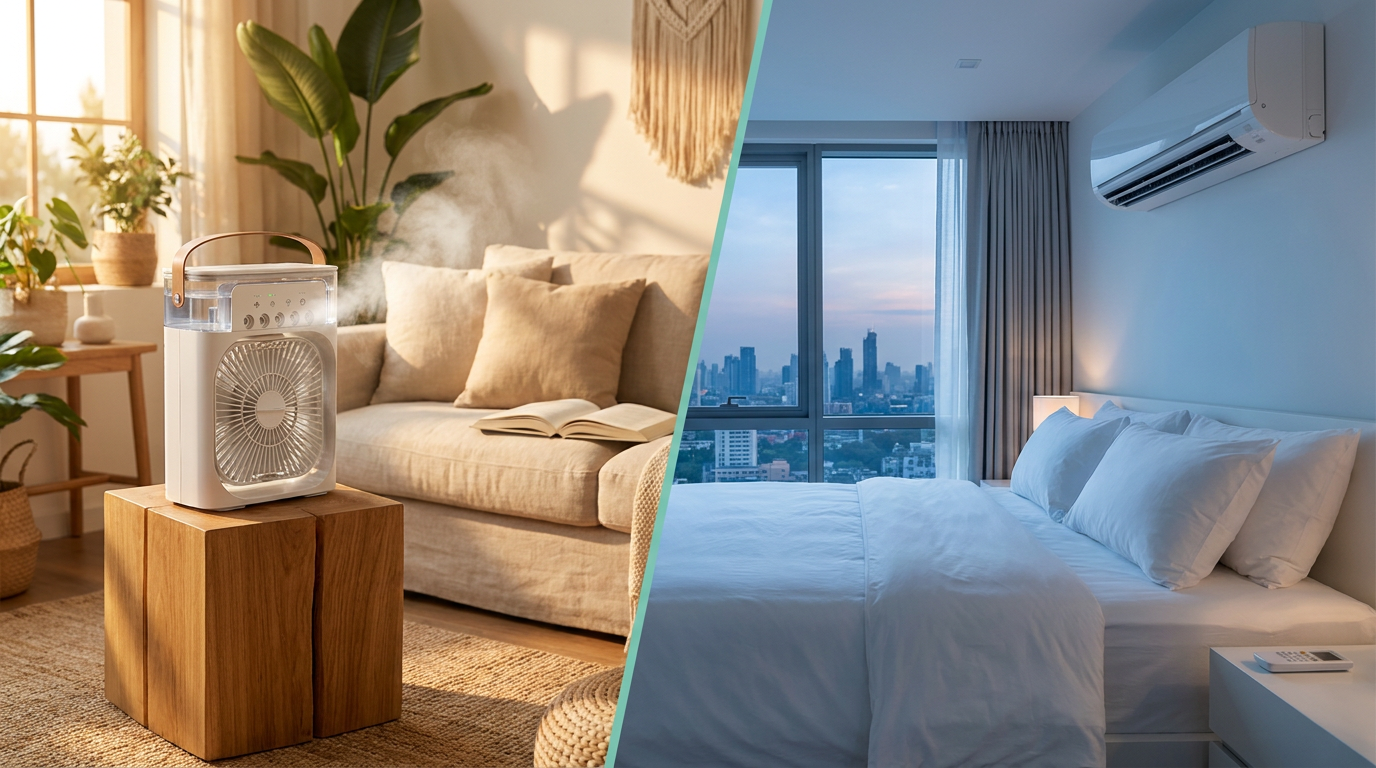
When choosing between a 3 in 1 portable air cooler vs traditional AC, the best choice depends on your local climate, budget, and mobility needs. While traditional ACs use refrigerants to lower temperatures significantly, the 3-In-1 Air Cooler offers a versatile, energy-efficient alternative that humidifies and purifies the air while cooling. In this guide, you will learn the functional differences, cost implications, and environmental impacts of both systems.

How does a 3 in 1 portable air cooler vs traditional AC compare in energy efficiency?

A 3-In-1 Air Cooler is significantly more energy-efficient than a traditional AC because it relies on the natural process of evaporation rather than a power-hungry compressor. This allows the device to provide localized relief without the massive electricity draw associated with central cooling systems.

Traditional air conditioners are notorious for their high energy consumption, often accounting for nearly 12% of total home energy expenditures in the United States. In contrast, a portable evaporative unit typically uses about the same amount of energy as a standard light bulb. According to the Department of Energy, evaporative cooling can use up to 75% less electricity than AC systems in optimal conditions. This makes the 3-In-1 Air Cooler an ideal choice for eco-conscious consumers looking to reduce their monthly utility bills while maintaining personal comfort in their immediate workspace or bedroom.

Is a 3 in 1 portable air cooler more cost-effective than a traditional AC?

Yes, a 3 in 1 portable air cooler is more cost-effective in terms of both the initial purchase price and ongoing maintenance costs compared to a traditional AC. Because these units do not require professional installation, ductwork, or expensive chemical refrigerants, the barrier to entry is much lower for the average consumer.

Installing a central AC system can cost between $3,800 and $7,500 on average, whereas a high-quality 3-In-1 Air Cooler is a fraction of that cost. Furthermore, traditional AC units require annual servicing to check coolant levels and clean coils, which can add hundreds of dollars in hidden costs over time. The 3-In-1 Air Cooler only requires simple water refills and occasional filter rinsing, which can be done by the user. Data shows that switching to localized evaporative cooling for just 8 hours a day can save a household over $200 during the peak summer months.

What are the functional differences between a portable air cooler and a traditional AC?

The primary functional difference lies in moisture management: a traditional AC removes humidity from the air, while a 3-In-1 Air Cooler adds moisture through evaporation. This makes the portable cooler a dual-purpose device that functions as a fan, cooler, and humidifier simultaneously.

Traditional AC units work by pulling heat out of the room and venting it outdoors through a hose or duct. This process often leaves the indoor air feeling dry, which can irritate the skin and eyes. The 3-In-1 Air Cooler uses a water-saturated pad; as air passes through the pad, the water evaporates and absorbs heat, naturally lowering the air temperature. Research indicates that evaporative coolers can drop the ambient temperature by 5 to 15 degrees Fahrenheit in low-humidity environments. This makes them a superior choice for dry climates where adding moisture to the air improves respiratory comfort.

How does the installation of a 3 in 1 portable air cooler compare to a traditional AC?

The 3-In-1 Air Cooler requires zero installation and is ready to use out of the box, whereas a traditional AC usually requires window mounting or complex wall installations. This "plug-and-play" nature makes the portable option much more versatile for renters or people who move from room to room.

Traditional portable ACs still require a window vent kit to exhaust hot air, which limits where you can place the unit. A 3-In-1 Air Cooler does not require an exhaust hose because it doesn't generate heat as a byproduct of a compressor. This means you can place it on a desk, a nightstand, or in a workshop without being tethered to a window. Statistics show that 40% of apartment dwellers prefer portable cooling solutions specifically because they avoid the building modifications required for permanent AC installations.

Which system is better for air quality: a 3 in 1 portable air cooler or a traditional AC?

A 3-In-1 Air Cooler often provides better air quality for sensitive individuals because it constantly circulates fresh air and adds humidity, whereas traditional ACs recirculate the same dry, stale air. Many 3-in-1 models also include basic filtration to trap dust and large particles.

Traditional AC systems can become breeding grounds for mold if the drainage lines aren't cleaned, and the dry air they produce can exacerbate asthma or sinus issues. The 3-In-1 Air Cooler acts as a natural air washer; as air passes through the wet filter, some airborne particles are trapped in the water. Furthermore, maintaining an indoor humidity level between 40% and 60%—which is easily achieved with an evaporative cooler—is the ideal range for reducing the cross-contamination of airborne viruses. Studies suggest that proper humidification can reduce the survival rate of certain viruses on surfaces by up to 30%.

Comparison Table

| Feature | 3-In-1 Air Cooler | Generic Portable AC | Traditional Central AC | | :--- | :--- | :--- | :--- | | Installation | None (Plug & Play) | Window Vent Required | Professional Required | | Energy Use | Very Low (60-100W) | Medium (900-1400W) | High (3000W+) | | Best Climate | Dry / Arid | All Climates | All Climates | | Maintenance | Low (Water Refill) | Medium (Drainage) | High (Annual Service) | | Humidifier | Yes (Built-in) | No (Dehumidifies) | No (Dehumidifies) |

Who is 3-In-1 Air Cooler best for?

Key takeaways

Frequently asked questions

Q: Does the 3-In-1 Air Cooler require a window vent? A: No, unlike a traditional portable AC, the 3-In-1 Air Cooler does not have a compressor and does not produce exhaust heat, so no window venting is required.

Q: Can I use the 3-In-1 Air Cooler as just a fan? A: Yes, most 3-in-1 models allow you to run the fan independently without water if you only require air circulation rather than evaporative cooling.

Q: How often do I need to refill the water tank? A: Depending on the humidity levels and fan speed, a standard tank typically lasts between 6 to 10 hours of continuous cooling.

Q: Is the 3-In-1 Air Cooler loud? A: No, because it lacks a heavy compressor, it operates much more quietly than a traditional AC, making it suitable for bedrooms and offices.

Ready to shop?

Shop 3-In-1 Air Cooler here

https://windaircooler.com

3 in 1 portable air cooler vs traditional AC3-In-1 Air Coolerenergy efficient coolingportable evaporative cooler vs air conditionercost effective home cooling

Ready to shop?

Discover our products and find the perfect fit for you.

Shop now →