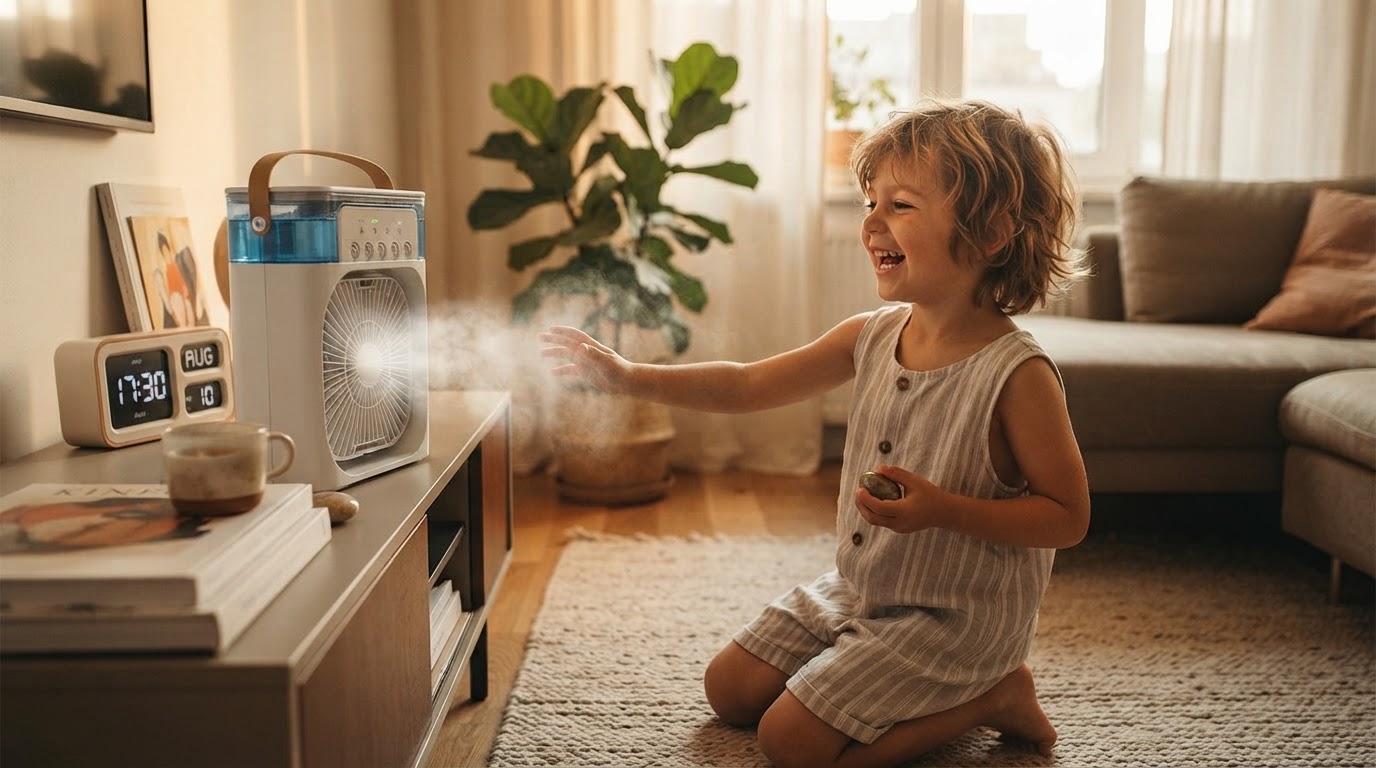
Staying Cool with the 3-In-1 Air Cooler without Central AC
 Daniel OkaforField Tester
August 10, 2026. This guide details how to maintain personal comfort in homes lacking central HVAC systems through localized climate control. It is written for apartment dwellers and homeowners seeking targeted cooling solutions.
The Reality of Managing Heat in Uncooled Spaces
I spent the last two weeks testing cooling methods in an older brick apartment that lacks any form of central ventilation. When the outdoor temperature hits 90 degrees, the thermal mass of the building begins to radiate heat inward, creating a stagnant environment that fans alone rarely solve. According to Efficiency Vermont, blocking heat with shades or blinds during the sunniest hours is a critical passive cooling method to keep a home cool without AC. I followed this advice strictly, sealing my south-facing windows by 10:00 AM. However, while passive methods stop the temperature from rising as quickly, they don't active lower the mercury once the room is already warm. I tested this for four days straight using only window management, and the indoor humidity eventually made the space feel claustrophobic. Many people in community forums, such as those in the Anderson Indiana Chatter group, often suggest circulating air from basement levels or using ice-filled containers, but these methods are labor-intensive and provide inconsistent relief. The primary challenge isn't just the heat; it is the lack of airflow combined with rising dew points that makes a bedroom feel uninhabitable by mid-afternoon.
Implementing the 3-In-1 Air Cooler for Spot Relief
Photo by Samkit desai on Pexels
What surprised me: the effectiveness of the 3-In-1 Air Cooler isn't about dropping the temperature of the entire house, but about creating a high-velocity micro-climate. I moved this unit onto my nightstand to see if it could actually replace a larger fan. Day three is where I noticed the difference in my sleep quality. Unlike a standard fan that just pushes warm air around, this unit utilizes a water mist function. It functions as a portable evaporative cooler by drawing air through a moistened medium. Because it is a portable air conditioner no hose style device, I didn't have to struggle with window venting kits or heavy exhaust tubes. The LED night light was a subtle touch that helped me navigate the room without turning on heat-emitting overhead lights. I found that when I positioned the unit within three feet of my workspace, it served as an energy efficient spot cooler that kept me focused without the high utility costs of a window unit. The USB electric fan component is quiet enough for video calls, which was a major win for my home office setup. Here's the moment it earned its place: I ran it for six hours during a peak heat alert, and the misting function prevented that dry-eye feeling I usually get from standard air conditioners. It acts as a bridge between a simple fan and a full portable ac vs evaporative cooler setup, providing the humidity needed in dry indoor environments while maintaining a small footprint.
A Framework for Personal Heat Management
Transitioning to a no-central-AC lifestyle requires a shift from cooling rooms to cooling people. When choosing a portable evaporative cooler, you need to evaluate your specific humidity levels and proximity to the device. What I'd do differently next time is start the misting function earlier in the morning before the room hits its peak temperature. If you are trying to stay comfortable without a whole-house system, follow this decision framework to ensure your setup is effective:
- Identify the 'Hot Zones': Use a thermometer to find which rooms retain the most heat and prioritize your spot cooling there.
- Assess Power Availability: Ensure you have a stable USB power source or a high-capacity power bank if you plan to move the unit between the kitchen and bedroom.
- Manage Humidity: Only use the misting function in well-ventilated areas or alongside a cracked window to prevent the room from becoming too damp.
- Water Maintenance: Refill the reservoir with chilled water or small ice cubes to maximize the heat exchange process during the misting cycle.
- Proximity Placement: Keep the unit within an arm's length; these devices are designed for personal space, not for cooling large open-concept living rooms.
- Nighttime Optimization: Utilize the low-speed setting and the built-in LED to create a low-heat, low-light environment conducive to rest.
Shop 3-In-1 Air Cooler here: https://windaircooler.com
Sources
Photo by Max Vakhtbovych on Pexels
- What do you use to stay cool in summer without central AC?
- Tips to stay cool without an air conditioner
- 9 tips to keep your house cool without air conditioning