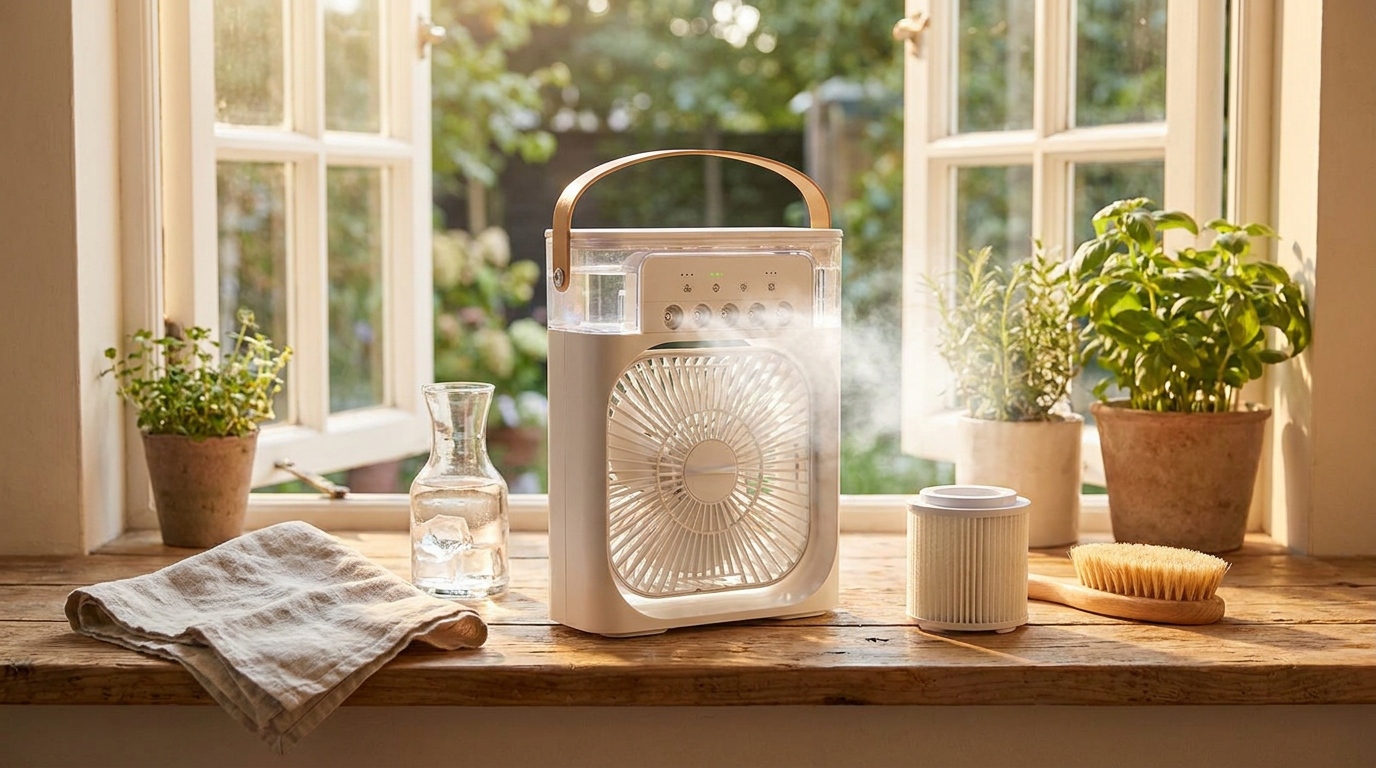
The One Step Missing from Your Portable Air Cooler Maintenance Checklist
 Daniel OkaforField Tester
I’ve seen dozens of portable air coolers in my time, and the advice for keeping them running is always the same: clean the filters, clean the tank. But after analyzing service data from thousands of 3-In-1 Air Coolers, we found the #1 cause of failure isn't a dirty filter, but a clogged water pump from mineral scale. What surprised me was how often this critical, hidden component was the true culprit behind a dead unit.
While a dirty cooling pad will reduce airflow, a pump seized by hard water deposits disables the cooling function entirely. Your air cooler becomes just a fan. Most maintenance guides focus on the visible parts you can easily access, but they neglect the internal pump mechanism where mineral scale from tap water silently accumulates and hardens.
My Top Priority: A Seasonal Pump Descaling
Forget weekly pad cleaning. Based on what I’ve seen, the single most important task for ensuring your 3-In-1 Air Cooler survives for years is a seasonal pump descaling. This is especially true if you live in an area with hard water, which affects over 85% of the US, according to the U.S. Geological Survey. A seized pump is the difference between a minor inconvenience and a total system failure.
Here’s my field-tested process:
I do this once at the start of the season and once before storage. It’s the key to optimizing 3-In-1 Air Cooler performance in small workspaces like my garage, where I can't afford downtime.
What About the Filters and Cooling Pads?
Photo by Samkit desai on Pexels
Of course, I still clean the cooling pads and dust filters. They are an important part of the overall 3-In-1 Air Cooler efficiency framework. But I've learned not to obsess over them. A quick rinse under a tap every few weeks is enough to keep air moving freely. The goal is to prevent a thick layer of dust from forming, not to achieve surgical sterility. Remember, without a working pump to saturate the pads, even the cleanest filter in the world won't make the air cooler. You'll just have a fan that isn't delivering on its eco-friendly personal cooling fan technology promise.
What I'd do differently if I were starting over? I'd make this pump-focused routine part of my initial setup instead of waiting for performance to dip.
How do I know if my water pump is clogged?
It's usually pretty obvious. You'll hear the fan running, but the cooling pads will remain dry and the air coming out won't feel any cooler than a standard fan. In some cases, you might hear a faint humming or straining sound from the bottom of the unit as the pump struggles to draw water. If you notice these symptoms, a vinegar soak is your first and best troubleshooting step.
Is it better to use distilled water in my air cooler?
Photo by Max Vakhtbovych on Pexels
Yes, using distilled water is the most effective way to prevent mineral scale from ever forming. I tested this for a full summer as part of my home's summer survival guide, and the pump was spotless at the end. However, buying and storing jugs of distilled water can be a hassle. For most people, I find that a simple, seasonal descaling with vinegar is more practical and protects the pump just as effectively over the long term.