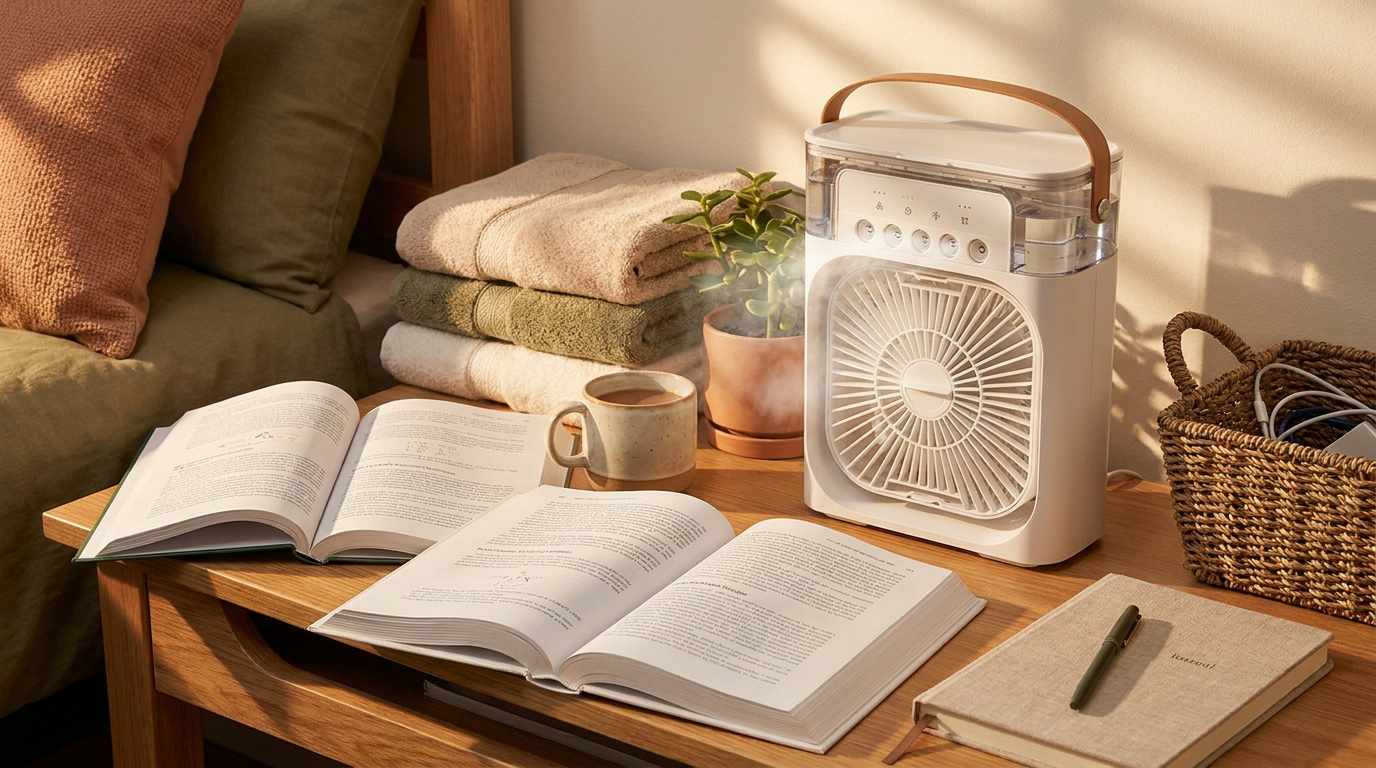
3-In-1 Air Cooler for Windowless Dorm Rooms
 Sam VasquezBuying Guide Lead
October 2, 2026. This guide examines effective strategies for cooling confined living spaces that lack external ventilation or window access. It is designed for university students and renters facing strict housing regulations regarding traditional air conditioning units.
The Challenge of Stagnant Air in Windowless Spaces
Living in a dorm room without a window creates a unique set of thermal challenges that standard fans often fail to solve. When there is no path for hot air to exit or fresh air to enter, the room becomes a heat trap, exacerbated by electronics like laptops and monitors. According to Aire Serv, cooling a room with no windows requires specific strategies such as using portable units for direct cooling or installing oscillating fans to improve air circulation. However, many students find that a simple fan just moves the same warm air around the room without actually lowering the temperature. This is where the distinction between air movement and heat removal becomes critical. In these environments, you are often fighting both rising temperatures and increasing humidity from daily activities.
If you are researching dorm room cooling solutions, you have likely realized that the lack of a window prevents the use of standard portable AC units that require an exhaust hose. Business Insider notes that if housing agreements forbid window units, freestanding alternatives are the only compliant path forward. For those stuck in a windowless interior room, the air quickly becomes heavy and uncomfortable. I have seen students try to rig complex ducting systems to hallway vents, but these are usually against fire codes and rarely work. The goal is to find a device that provides localized relief without needing to vent to the outside, which is why many turn to a portable ac alternative for small room setups that utilize evaporative cooling rather than refrigerant-based compressors.
How the 3-In-1 Air Cooler Manages Internal Heat
The 3-In-1 Air Cooler is engineered to address the specific limitations of small, windowless environments by combining three distinct functions: an electric fan, a humidifier, and an LED night light. Unlike traditional air conditioners that rely on a chemical refrigerant and a bulky compressor, this device uses water mist to facilitate evaporative cooling. In a dorm setting, this means you don't have to worry about a heavy exhaust hose or leaking window seals. The unit operates via a USB interface, making it compatible with the power banks and laptop ports already present on a student's desk. It is a targeted solution for those who need to know [how to stay cool without central ac](/blog/how-to-stay-cool-without-central-ac) in a localized area, such as a study nook or a bed.
Here’s what I’d actually buy if I were moving into a small interior dorm: the 3-In-1 Air Cooler for my desk and a basic box fan for the floor to keep the air from settling. The 3-In-1 unit specifically addresses the dryness that often comes with institutional HVAC systems while providing a focused stream of chilled mist. It is effectively a personal swamp cooler for a desk, which is a frequent topic of discussion for those seeking a portable ac alternative for small room. The integration of the LED night light is a practical touch for shared rooms where overhead lighting might disturb a roommate. By adding ice to the water tank, the output temperature drops significantly, providing a much-needed reprieve during late-night study sessions when the building's main cooling might be throttled back. If you're on a budget, this multi-functional approach saves you from buying a separate desk lamp and humidifier, keeping your limited surface area clear.
Selecting the Right Cooling Method for Your Layout
Choosing a cooling device for a dorm requires balancing performance with university policy. Most campus housing offices have strict rules against high-draw appliances that could trip breakers or units that require permanent modifications. Between a standard high-velocity fan and an evaporative cooler, I’d go with the evaporative option for a windowless room because it provides a tangible drop in the air temperature near your body, rather than just a breeze. However, you must consider the humidity levels of your geographic location. Evaporative cooling works best in dry climates; if you are in a high-humidity coastal area, the cooling effect will be less pronounced, though still functional as a powerful fan.
Skip this if you have access to a window and the budget for a full-sized compressor unit, as those will always be more powerful. But for everyone else, follow this decision framework:
- Verify your dorm's policy on "swamp coolers" or evaporative devices; most allow them since they lack compressors.
- Measure your desk space to ensure the unit won't interfere with your laptop or textbooks.
- Check for available USB power ports or ensure you have a wall adapter that meets the unit's requirements.
- Consider your noise tolerance; look for units with adjustable speeds to manage sound during sleep.
- Assess whether you need the added benefit of a humidifier to combat dry dormitory air.
The 3-In-1 Air Cooler offers a compact and efficient way to stay comfortable in challenging dorm environments without the need for complex installations. Shop 3-In-1 Air Cooler here.
Sources
- What to use for cooling in a dorm room with no air conditioning? - Facebook
- 24 Best Dorm Room Cooling Products, No AC Required - Business Insider
- How to Cool a Room with No Windows - Aire Serv