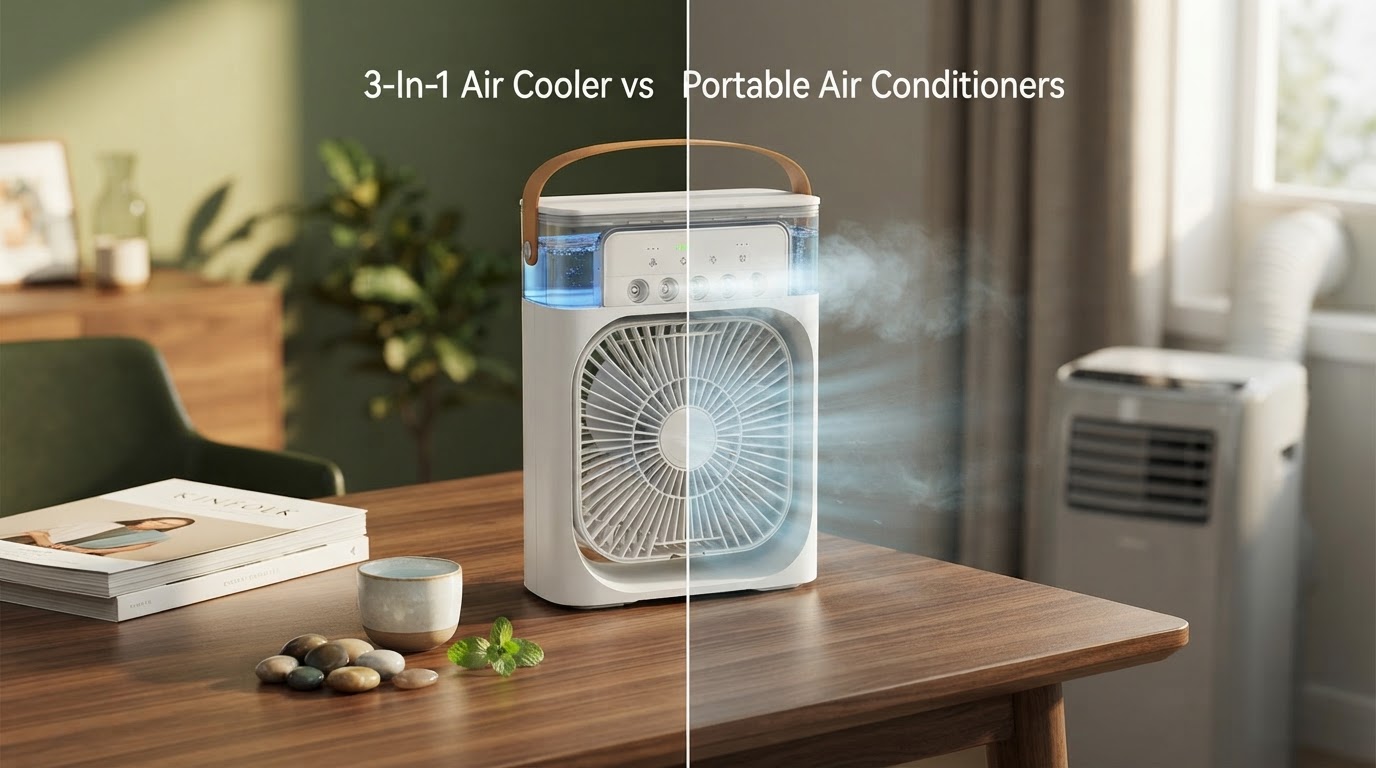
3-In-1 Air Cooler vs Portable Air Conditioners
 Sam VasquezBuying Guide Lead
August 26, 2026. This comparison examines the functional differences between chemical-based refrigeration and water-led cooling to determine the most efficient personal climate solution. It is written for homeowners and office workers seeking relief from rising indoor temperatures without committing to permanent installations.
The Core Differences in Cooling Technology
When the mercury rises, the immediate instinct is to look for the most powerful cooling source available. However, the distinction between how a portable air conditioner and an evaporative cooler functions is often misunderstood. A portable air conditioner (AC) is a self-contained system that uses a compressor and chemical refrigerants to actively remove heat from a room. According to Honeywell Air Comfort, these units must be vented through a window to exhaust the hot air they extract from the space. This requirement often limits where you can place the unit, as you are tethered to a window by a bulky plastic hose. If you are researching how to stay cool without central AC, you will find that these units are effective but come with significant energy costs and installation constraints.
Conversely, an evaporative cooler operates on the principle of thermal absorption via water evaporation. Instead of using a compressor to chill the air, it pulls warm air through a wet honeycomb filter, which naturally lowers the air temperature and adds moisture to the breeze. Portacool notes that these systems are far more energy-efficient than traditional AC because they only require electricity to run a fan and a small water pump. In dry climates, this process is remarkably effective, though it requires a constant supply of fresh air—usually an open window or door—to prevent the room from becoming overly humid. Between these two, I'd go with the evaporative method if your primary concern is portability and operating costs. Portable AC units can cost between $30 and $80 per month to run, whereas a portable evaporative cooler typically costs a fraction of that amount.
Why the 3-In-1 Air Cooler Fits Small Spaces

Photo by Max Vakhtbovych on Pexels
The 3-In-1 Air Cooler addresses the specific needs of users who require a mini air conditioner for bedroom use or a personal desk setup. Unlike large, industrial evaporative units, this device is designed for localized cooling. It features three distinct functions: a standard electric fan, a water-mist humidifier, and an LED night light. This versatility is crucial for people who find that a standard fan simply moves hot air around without actually lowering the temperature. By utilizing the water mist function, the device provides a perceptible drop in temperature for the user directly in its path.
Skip this if you are trying to cool a 500-square-foot living room; this device is engineered for personal zones. However, for those looking for a personal swamp cooler for desk use, the USB-powered nature of the 3-In-1 Air Cooler makes it extremely convenient. It doesn't require a dedicated wall outlet or a window vent, which are the two biggest hurdles when installing a portable AC. In my experience, the ability to move the cooler from a bedside table to a workspace without wrestling with a six-inch exhaust hose is a major advantage. While a portable AC uses refrigerant to extract heat, the 3-In-1 Air Cooler uses simple physics to provide a refreshing breeze. If you're on a budget, the initial purchase price and the lack of a spike in your monthly utility bill make the 3-In-1 Air Cooler a more sustainable choice for seasonal heatwaves.
Making the Right Choice for Your Environment
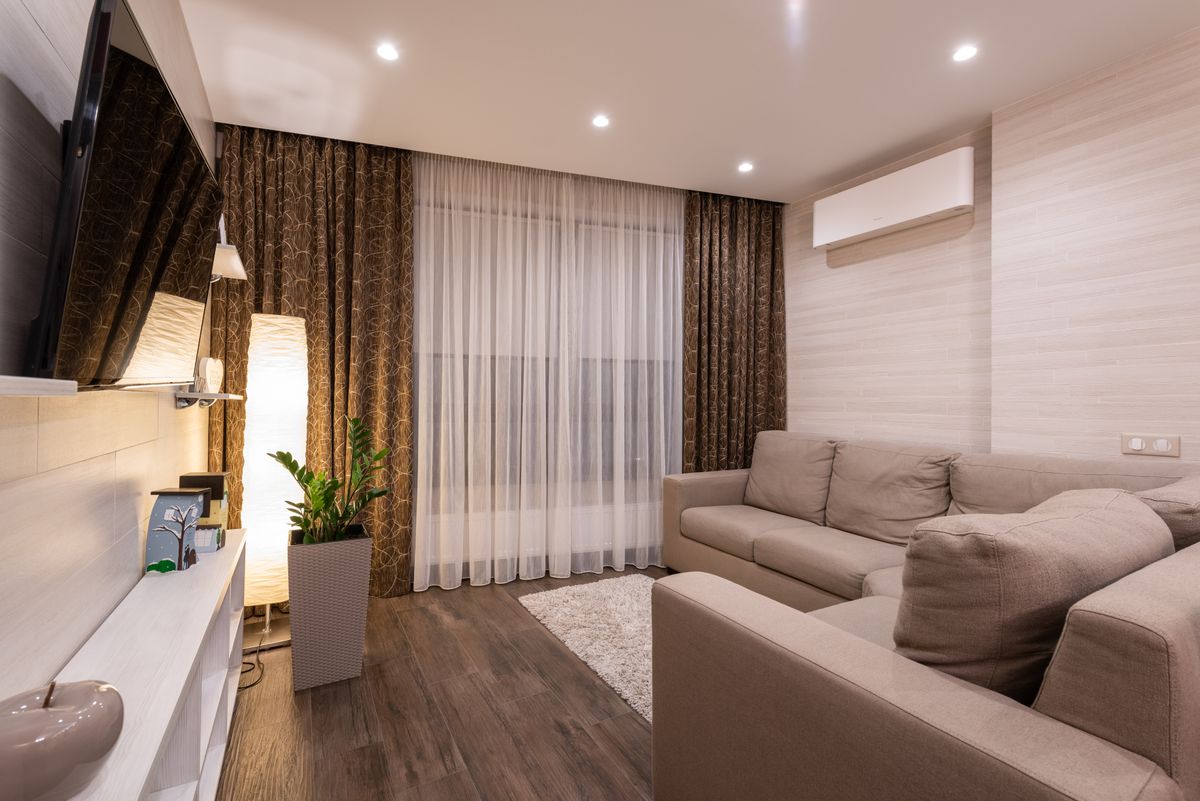
Photo by Max Vakhtbovych on Pexels
Choosing between these two technologies depends entirely on your local climate and the specific room you intend to cool. If you live in a region with high humidity, an evaporative cooler will be less effective because the air is already saturated with moisture, preventing the evaporation process from occurring efficiently. In those specific cases, a portable AC is the only way to significantly lower the room temperature. However, for the majority of users looking for a 3 in 1 air cooler to handle localized heat, the simplicity of the evaporative method is preferred.
Here's what I'd actually buy: for a home office or a bedroom where you only need to cool the area immediately around you, the 3-In-1 Air Cooler is the practical choice. It serves as a portable fan air conditioner hybrid that handles the dry air often caused by traditional cooling systems. Before you make a purchase, run through this checklist to ensure you are getting the right tool for the job:
- Check your local humidity levels; evaporative cooling works best in humidity below 60%.
- Identify if you have a window nearby; if not, skip the portable AC.
- Determine if you need the device to be mobile; USB-powered units offer the most flexibility.
- Assess your noise tolerance; portable AC compressors are significantly louder than the 3-In-1 Air Cooler fan.
- Consider the maintenance; evaporative coolers require regular water refills and filter cleaning, while ACs require draining water tanks.