Choosing Between Portable AC and 3-In-1 Air Cooler Units
 Priya RamanSenior Analyst
September 18, 2026. This analysis evaluates the mechanical and operational differences between refrigerant-based portable air conditioners and evaporative cooling systems. It is intended for consumers seeking a targeted thermal management solution for home offices, bedrooms, or small living spaces. To evaluate these technologies, think of it as a matrix of energy consumption, installation requirements, and ambient humidity levels. Two axes matter here: the necessity of an external exhaust and the specific method of heat transfer.
The Thermodynamic Challenge of Indoor Cooling
Selecting a cooling method requires an understanding of how heat is moved rather than just how cold air is generated. According to Honeywell Air Comfort, the primary distinction lies in how these units interact with their environment: air coolers require an open window for cross-ventilation to prevent moisture buildup, while portable ACs must have a window to vent out hot air through a dedicated hose. This fundamental difference dictates where a unit can be placed and how much effort is required for setup. A portable air conditioner functions as a heat pump, using a compressor and chemical refrigerants to extract thermal energy from a room and discharge it outdoors. This process is effective but energy-intensive.
Conversely, a portable evaporative cooler utilizes the natural process of water evaporation to lower the air temperature. This method does not require a compressor, which significantly reduces the mechanical complexity and power draw of the device. However, the efficacy of this process is tied to the existing moisture levels in the room. Evapolar notes that while a fan simply moves air, an evaporative cooler uses water to actively chill it, whereas a portable AC extracts heat entirely. For users in arid climates, the evaporative method provides both cooling and necessary moisture, acting as a quiet portable cooling fan humidifier that improves air quality without the harsh dryness often associated with traditional air conditioning. The challenge for many consumers is determining if their specific micro-environment—such as a desk or a small bedroom—needs the heavy-duty heat extraction of an AC or the efficient, localized relief of an evaporative system.
Performance Characteristics of the 3-In-1 Air Cooler
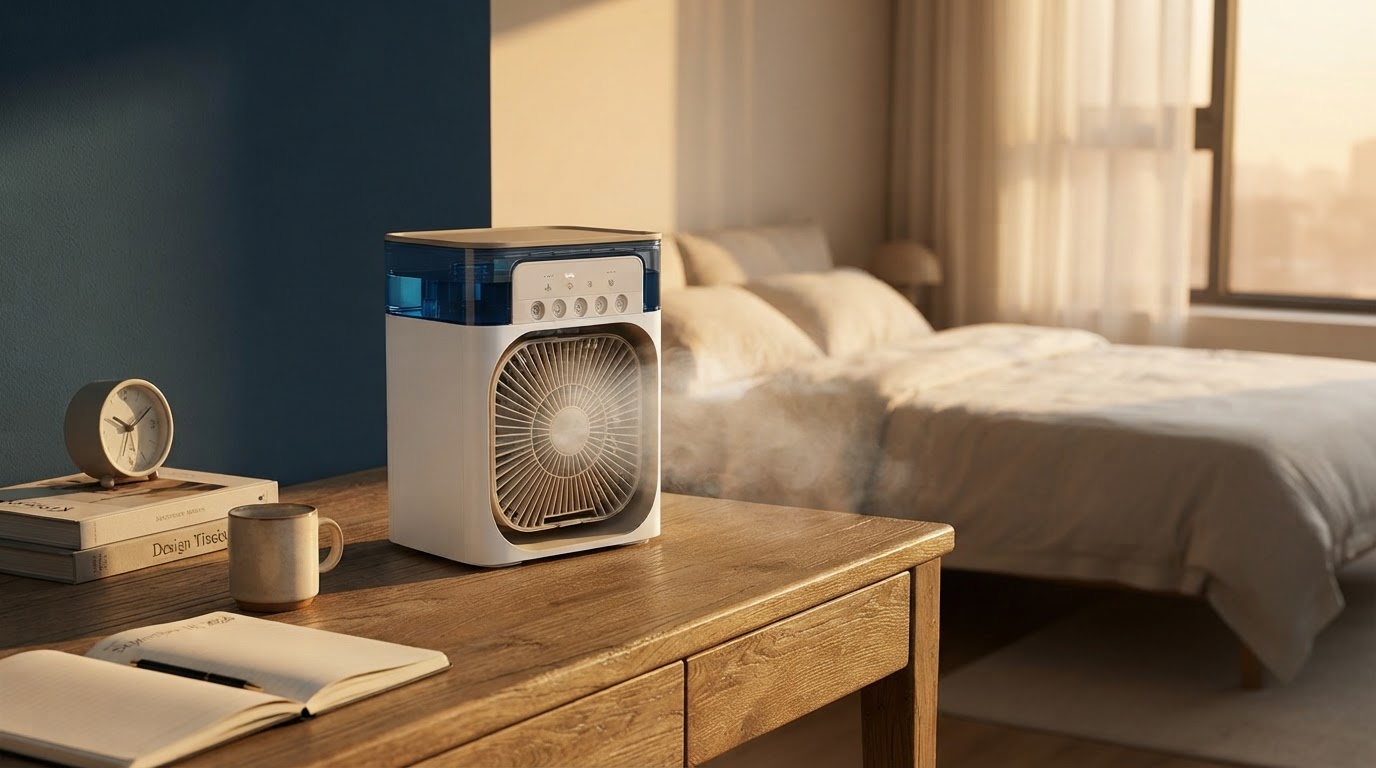
The 3-In-1 Air Cooler is designed to address the specific needs of "spot cooling" where traditional HVAC systems or bulky portable ACs are impractical. In many residential settings, users are searching for a mini air conditioner for bedroom use that does not require permanent window fixtures or professional installation. The 3-In-1 Air Cooler operates on a low-voltage USB electric fan system, incorporating a water mist function and an LED night light to serve multiple functions in a single footprint. This versatility makes it a primary choice for those looking for an energy efficient spot cooler that can be powered by a laptop or a portable power bank.
Because the 3-In-1 Air Cooler lacks a heavy compressor, it avoids the high operational costs associated with refrigerant systems. According to data cited by Evapolar, portable ACs can cost between $30 and $80 per month to operate, depending on usage. In contrast, the 3-In-1 Air Cooler uses significantly less wattage, making it a sustainable option for long-term daily use. The unit functions by drawing warm air through a saturated cooling medium; as the water evaporates, it absorbs heat, resulting in a stream of air that is notably cooler than the ambient temperature. This makes it particularly effective as a personal swamp cooler for a desk or bedside table. Furthermore, because it integrates a portable evaporative cooler mechanism with a humidifier, it prevents the skin and nasal passages from drying out, a common complaint among users of standard air conditioners. The inclusion of an LED night light and quiet fan speeds ensures that the device supports a restful environment, doubling as a quiet portable cooling fan humidifier that does not disrupt sleep or focus during work hours.
The Decision Rule for Optimal Cooling
Once you see it this way, the choice between a portable AC and a 3-In-1 Air Cooler becomes a matter of matching the technology to your specific environmental constraints. If you are in a high-humidity coastal area and need to lower the temperature of a large, sealed room by 15 degrees, a refrigerant-based AC is the standard tool. However, for the vast majority of personal cooling needs—such as maintaining comfort at a workstation or during sleep—the 3-In-1 Air Cooler offers a more flexible and cost-effective path. The decision rule: prioritize the 3-In-1 Air Cooler if you value portability, low energy costs, and the added benefit of humidification, provided you have access to a small amount of fresh air circulation.
Use this checklist to determine if the 3-In-1 Air Cooler is the right fit for your space:
- Portability Requirements: You need a device that can move from a desk to a bedside table without managing a heavy exhaust hose.
- Energy Sensitivity: You prefer a device that can run on USB power to keep utility bills low.
- Humidity Levels: Your indoor air is currently dry, and you would benefit from an energy efficient spot cooler that adds moisture to the air.
- Installation Constraints: You live in a space where you cannot easily vent a large hose through a window or wall.
- Proximity: You are looking for personal "spot" cooling within a 3-to-6-foot radius rather than attempting to chill an entire house.
Sources
- Evaporative Air Cooler Vs Portable AC: Which Cools Better? - YouTube
- Portable AC vs. Evaporative Cooler - Honeywell Air Comfort
- Evap Coolers Vs. A/C: What's The Difference? | Portacool